
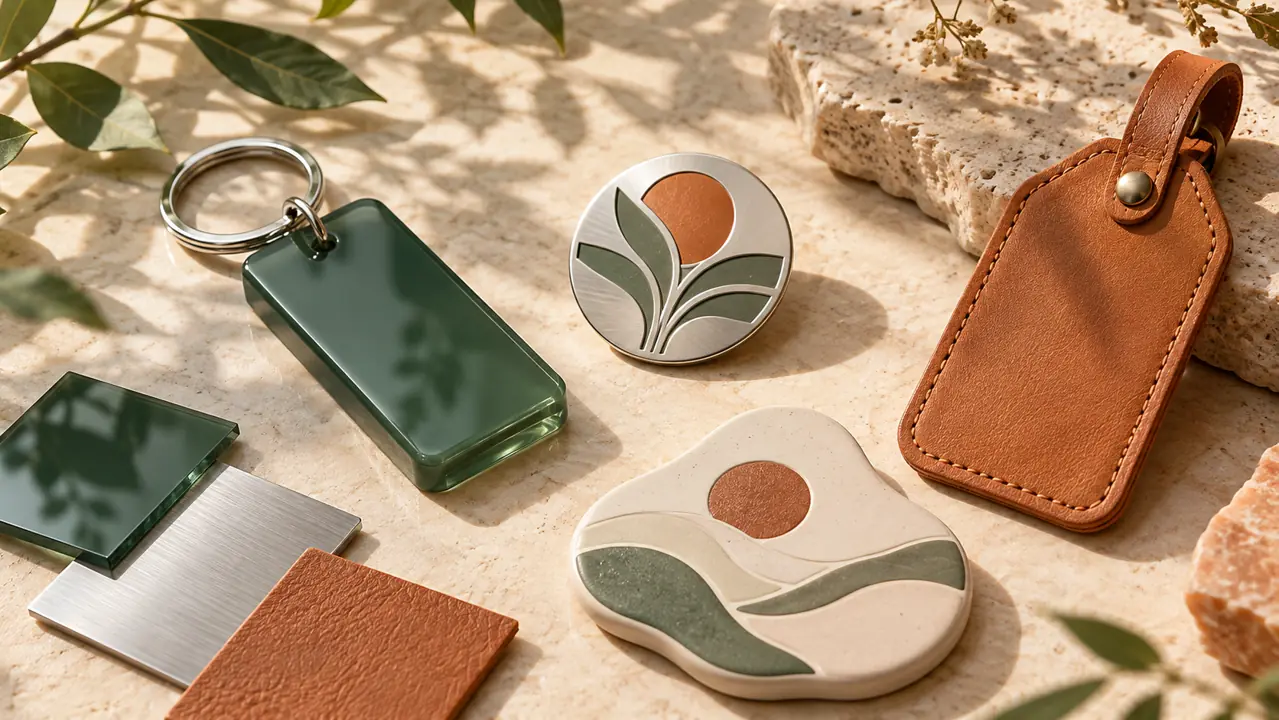
Choosing custom merchandise materials starts with how the item will be used, not simply how it looks in a mockup. A souvenir sold in a museum shop, a pin worn at an event and a keychain used every day need different balances of detail, durability, weight and cost. This guide helps B2B buyers compare common options before requesting a sample or quotation.
Start with the project, audience and use
Write down where the item will be sold or distributed, the expected order quantity and your target unit cost. Consider whether customers will carry it daily, display it indoors or give it as a gift. A detailed illustration may suit printed acrylic; a small emblem may work better in metal. For retail, think about perceived value and packaging as well as the product itself.
Browse Mamorica’s merchandise collections to compare product formats, then use the Design Gallery to discuss the visual direction and finish you want.
Compare common custom merchandise materials
Acrylic: color, transparency and illustrated details
Acrylic is an option for printed keychains, charms and display pieces where color and fine graphic detail matter. Clear, translucent and layered effects can create different visual results. Confirm the thickness, edge treatment, print position and attachment method rather than judging the artwork alone. A protective surface treatment may be worth discussing for frequently handled items.
Metal: structure and a tactile finish
Metal can suit pins, badges, medals and keychains that need a substantial feel. The final appearance depends on the base material, plating, recessed or raised areas and color process. Enamel-filled areas and printed details behave differently, so tiny text and thin lines should be checked for production suitability. Request a finish reference and sample when color or surface appearance is important.
Wood: natural character and variation
Wood can provide a warmer appearance for ornaments, souvenirs and decorative items. Grain and tone vary, even within one order. Ask about the wood type, surface coating, print or engraving method and edge finish. If your design relies on exact color matching, agree on acceptable variation before production.
Leather and synthetic alternatives: texture and everyday use
Leather-style tags, straps and small accessories depend on more than surface color. Confirm whether the specified material is genuine leather or a synthetic alternative, then review thickness, stitching, edge finishing and hardware. Embossed artwork generally benefits from simpler shapes. Do not assume that every leather-like material has the same wear characteristics or environmental credentials.
Check finishes, fittings and artwork together
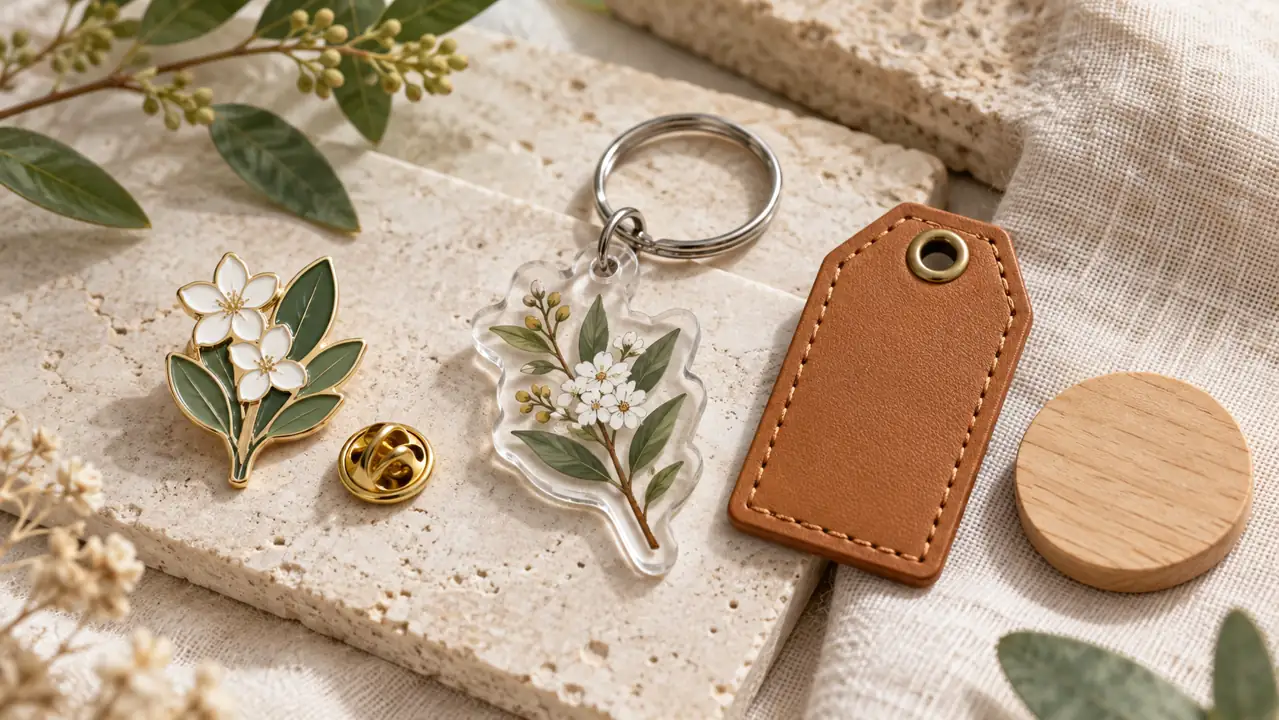
A product is a combination of material, finish and construction. A good-looking charm can still be inconvenient if its attachment is too heavy or its edges are rough. Ask to see the ring, clasp, pin back or magnet connection as part of the sample review. Check how the item feels in the hand and whether it functions as intended.
- Inspect small text, line thickness and color separation at the actual product size.
- Confirm the intended dimensions, thickness, weight and front/back appearance.
- Review plating or coating references under consistent lighting.
- Check attachment position, movement and clearance.
- Agree on packaging that protects the finish during handling and transport.
Match the material to the buying scenario
For museum and tourism retail, a recognizable motif and a coherent series may matter more than adding many effects to a single item. For corporate gifts, practical use and presentation can guide the choice. For event or fan merchandise, lightweight formats and clear graphics may be useful starting points. These are project considerations rather than fixed rules: test the proposed sample against your audience, budget and distribution plan.
For example, the same original botanical illustration could become a printed acrylic charm, a simplified enamel pin or an embossed tag. Each version requires artwork adjustments. Choosing one process first and adapting the artwork to it often produces a cleaner result than forcing an identical drawing into every material.
What to include in a quotation request
Send the product type, intended dimensions, quantity, material preference, artwork and required delivery destination. Add reference images for the finish and specify individual or retail packaging. If you have a target budget or event date, include it early. Minimum order quantities, sample charges and lead times depend on the design and production process; request confirmation for your specific project.
Once you have selected a direction, continue with our custom merchandise sourcing guide for the steps from design brief to bulk production.
Frequently asked questions
Which material is best for custom merchandise?
There is no single best material. Compare the desired visual detail, intended use, weight, finish and budget. A physical sample is particularly useful when the decision depends on texture or perceived quality.
Can the same artwork be used for acrylic, metal and leather?
The concept can often be shared, but the production artwork may need different line thicknesses, color separations or simplified details. Ask for a process-specific review before sample approval.
Should I approve a sample before placing a bulk order?
For a new design, material or finish, sample approval helps clarify what the final product should look and feel like. Record the agreed specifications and any acceptable variation alongside the approved sample.
Plan a material direction with Mamorica
Share your original design, product idea and quantity with Mamorica. We can discuss suitable material and finish directions for your project without making assumptions about your budget or timeline. Contact us to request a project quotation.