Custom merchandise sourcing is easier when the design brief, quotation and sample approval all describe the same product. For a museum shop, retail collection, corporate gift or event, a clear process reduces avoidable changes between the first idea and the finished order. Use this guide to organize the information your supplier needs and the decisions your team should confirm.
1. Define the project before requesting prices
Start with the purpose of the merchandise and how it will reach the end user. Will it be sold individually, included in a gift set or distributed at an event? Confirm your audience, approximate quantity and target budget. A retail item may need a backing card and barcode area, while an event giveaway may prioritize easy handling and transport.
Choose one or two suitable product formats from Mamorica’s custom merchandise collections. If the material is still undecided, use our material selection guide to compare acrylic, metal, wood and leather-style options before narrowing the brief.
2. Prepare artwork and a usable specification
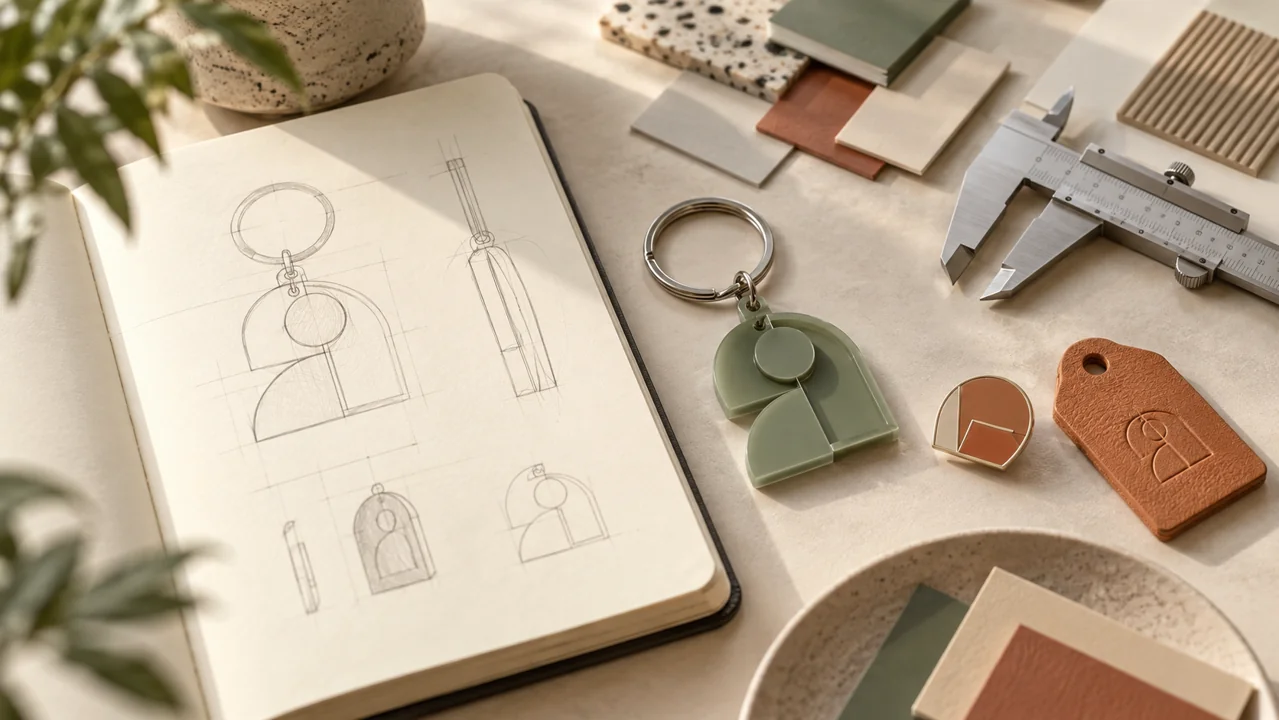
A supplier needs more than an attractive reference image. Provide the intended dimensions, front and back design, material preference, finish and attachment. Send editable artwork when available, along with a preview that shows the intended result. Explain which colors or details must be preserved and which can be adapted for the selected production process.
Check that you have the rights to use every illustration, logo and character in the artwork. A reference to a famous product is not permission to reproduce its design. Original graphics or properly licensed artwork make the brief clearer and avoid unnecessary problems during development.
Quotation request checklist
- Product format and intended use.
- Order quantity, including any quantity per design or color.
- Dimensions, thickness and material preference.
- Artwork files and reference images for the desired finish.
- Ring, clasp, pin back, magnet or other fitting requirements.
- Individual packaging, retail backing card or gift-box requirements.
- Delivery destination and desired arrival date.
- Target budget and the person who will approve the sample.
3. Compare quotations on the same basis
Custom merchandise sourcing should compare complete specifications rather than unit price alone. Check whether each quotation includes tooling or setup, samples, packaging and delivery. If these are listed separately, calculate the combined cost for the same quantity and destination. Ask what changes when the quantity, material or packaging changes.
Confirm the minimum order quantity for each design and process. Do not assume that several designs can be combined to meet one minimum. Ask how the payment stages, sample approval and production schedule connect. Keep the written quotation and final specifications together so everyone is working from the same version.
4. Review and approve the sample
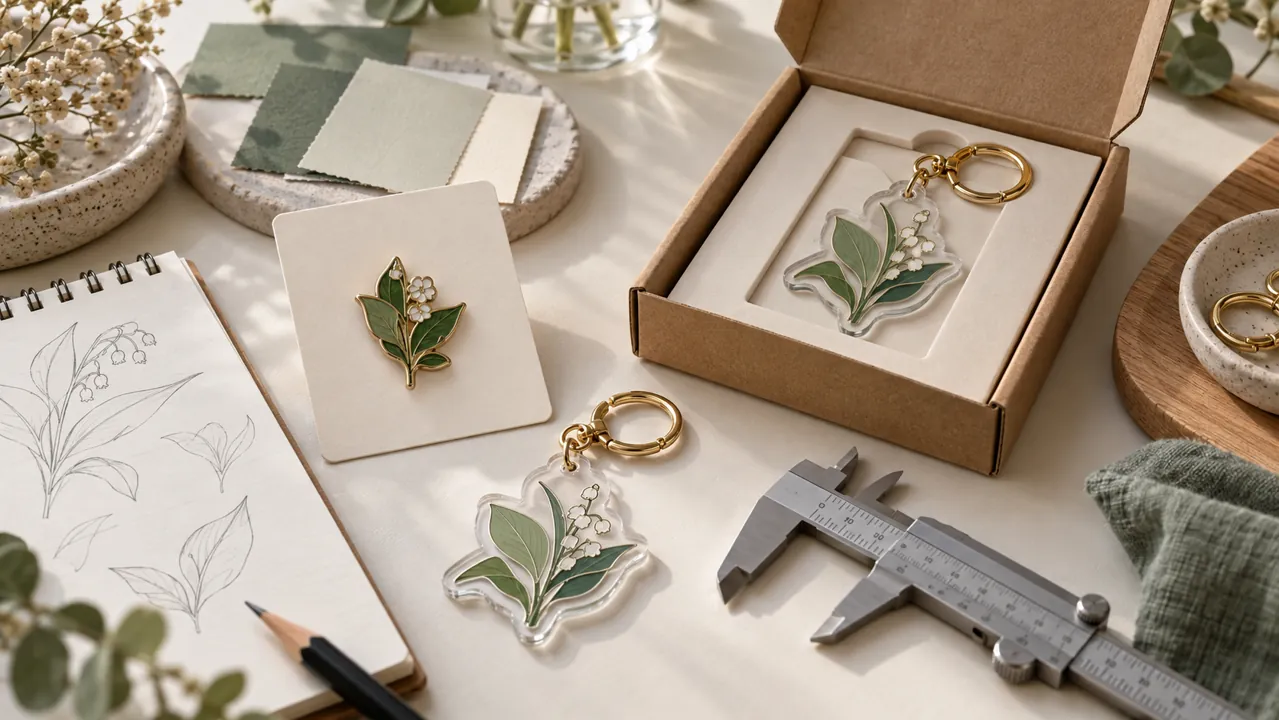
A digital proof helps check layout, dimensions and artwork placement, but it cannot show every aspect of texture, weight or surface finish. For a new product or process, discuss a physical sample. Review it under consistent lighting and at its intended size. If the item will be sold on a card or in a box, inspect the packaging together with the product.
- Compare the sample against the approved drawing and dimensions.
- Review print clarity, line detail, finish and agreed color references.
- Check edges, stitching, attachment position and hardware function.
- Confirm that the packaging fits and protects the product.
- Record corrections clearly, using labeled photos where useful.
Approve a specific sample or revision in writing. If a correction affects construction or finish, ask whether another sample is needed before bulk production. Avoid approving with vague instructions such as “make it better” or “use a similar green”; specify what must change.
5. Confirm bulk production and quality checks
Before production begins, confirm the final quantity, design version, approved sample, packaging and expected completion date. Agree on the quality checks that matter for the product: dimensions, visual finish, fitting security and packaging are common examples. Where natural materials are used, record any acceptable variation.
For custom merchandise sourcing across borders, clarify who arranges shipping and what the quoted delivery terms include. Product requirements, labeling and import procedures vary by destination and intended user. Confirm any applicable testing or documentation needs early, rather than assuming that every item is suitable for every market.
6. Plan delivery, receipt and future reorders
Allow time for artwork review, samples, corrections, bulk production and transport. An event date is an arrival deadline, not a production completion date. Ask for a project-specific schedule and identify which steps depend on your approval. If the deadline is fixed, discuss a simpler format or packaging option before committing.
When the order arrives, check quantities, packaging condition and representative products against the approved reference. Keep the final artwork, specifications and sample record for reorders. If you plan to add related designs later, a consistent format and finish can help the collection look coherent.
Frequently asked questions
What is the minimum order quantity for custom merchandise?
It depends on the product, material, process and number of designs. Request the minimum for your specific brief and ask whether quantities are counted per design, color or total order.
How long does custom merchandise production take?
Timing depends on artwork readiness, sample revisions, production complexity, quantity and shipping. Ask for separate estimates for samples, bulk production and delivery, with the approval deadlines included.
Can I request a quotation before the design is finished?
Yes, an initial concept, approximate size, quantity and material direction can support an indicative discussion. The final price and feasibility should be confirmed after the detailed specification is reviewed.
Should packaging be developed at the same time?
Yes. Packaging affects dimensions, protection, presentation and cost. Discuss it during the brief so that the product and packaging can be checked together before production.
Start your sourcing brief with Mamorica
Explore the Design Gallery for visual and finish directions, then share your original artwork, quantity and delivery needs. Mamorica can discuss the next steps for your proposed merchandise project. Send your project brief and request a quotation.